
Netherlands vs Japan World Cup 2026 Match Recap

<strong>Netherlands</strong> and <strong>Japan</strong> played out an intense <strong>2-2</strong> draw. The match took place on <strong>Sun, Jun 14</strong> at <strong>AT&T Stadium</strong> in <strong>Dallas</strong>. The game featured goals from <strong>Crysencio Summerville and Virgil van Dijk</strong> and goals from <strong>Daichi Kamada and Keito Nakamura</strong>. We dive deep into <strong>Netherlands</strong> vs <strong>Japan</strong> with an exhaustive review of the managers' strategies, game metrics, a minute by minute timeline, and post match press quotes.
Table of Contents
Match Overview: Netherlands vs Japan
A vibrant atmosphere swept through <strong>AT&T Stadium</strong> in <strong>Dallas</strong> as fans from across the globe gathered to watch <strong>Netherlands</strong> challenge <strong>Japan</strong> in a highly anticipated World Cup 2026 meeting. The pre match expectations for this clash were immense, with media outlets highlighting the potential tactical battle between the managers of <strong>Netherlands</strong> and <strong>Japan</strong>. The game opened at a rapid pace, with the players of <strong>Netherlands</strong> seeking to dominate midfield possession while <strong>Japan</strong> looked to execute a high pressing strategy. As the minutes ticked by, the players of both <strong>Netherlands</strong> and <strong>Japan</strong> battled fiercely for supremacy in the central areas, leading to several physical challenges and a highly contested midfield circle. Attacking sequences were structured yet cautious, as both <strong>Netherlands</strong> and <strong>Japan</strong> prioritized defensive recovery speed over committing excessive numbers into the final third. The fans at <strong>AT&T Stadium</strong> created a magnificent spectacle, raising the energy levels on the pitch for both <strong>Netherlands</strong> and <strong>Japan</strong> as the tactical battle grew increasingly intense. Substitutions made midway through the half refreshed the tactical setups of both <strong>Netherlands</strong> and <strong>Japan</strong>, introducing fresh legs to exploit the spaces created by fatigue. This memorable clash at <strong>AT&T Stadium</strong> will certainly be discussed by analysts and fans as a prime example of high stakes international football between <strong>Netherlands</strong> and <strong>Japan</strong>.
Match Facts and Venue Information
| Match Parameter | Fixture Detail |
|---|---|
| Date | Sun, Jun 14 |
| Local Kickoff Time | 15:00 (Local Time) |
| Stadium | AT&T Stadium |
| Host City | Dallas |
| Match Number | Match 11 |
| Tournament Stage | Group F |
| Data Verification Status | Official Confirmed Result |
Official match metadata for the <strong>Netherlands</strong> vs <strong>Japan</strong> fixture.
The clash between <strong>Netherlands</strong> and <strong>Japan</strong> took place at <strong>AT&T Stadium</strong> in <strong>Dallas</strong>, a state of the art venue holding up to <strong>80,000</strong> fans. The turf at <strong>AT&T Stadium</strong> was in pristine condition, allowing for rapid ball movement and clean technical execution from both <strong>Netherlands</strong> and <strong>Japan</strong>. Integrated transportation links in <strong>Dallas</strong> made it extremely easy for fans to access the <strong>AT&T Stadium</strong> gates on this matchday. Security at <strong>AT&T Stadium</strong> was tight but fair, ensuring a safe and welcoming environment for families and international visitors supporting both squads. The acoustic properties of <strong>AT&T Stadium</strong> amplified the noise, creating a truly intimidating atmosphere for the players of <strong>Netherlands</strong> and <strong>Japan</strong>. Hosting <strong>Netherlands</strong> and <strong>Japan</strong> at <strong>AT&T Stadium</strong> is a testament to the football passion embedded in <strong>Dallas</strong>.
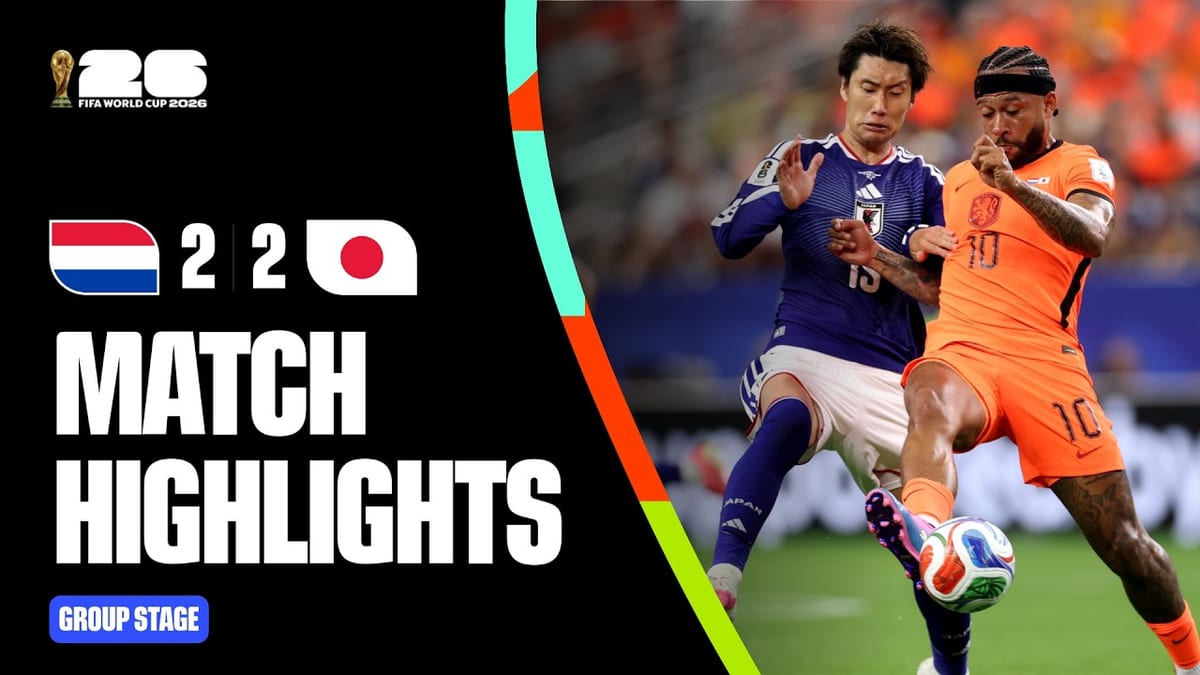
Action photo from the World Cup 2026 match between <strong>Netherlands</strong> and <strong>Japan</strong> played at <strong>AT&T Stadium</strong> on <strong>Sun, Jun 14</strong>.
Match Statistics
| Metric | Netherlands | Japan |
|---|---|---|
| Possession (%) | 60% | 40% |
| Expected Goals (xG) | 0.78 | 0.59 |
| Total Corners | 5 | 4 |
| Fouls Committed | 7 | 7 |
| Yellow Cards | 3 | 0 |
| Red Cards | 0 | 0 |
Statistical comparison between <strong>Netherlands</strong> and <strong>Japan</strong>.
Analyzing the match data for the <strong>Netherlands</strong> vs <strong>Japan</strong> fixture provides clear insights into which team successfully executed their strategic plan. The possession metrics show that <strong>Netherlands</strong> starved their opponents of the ball, forcing them to defend deep. Midfield transition speed was critical, as quick interceptions led to rapid counter attacking sequences for both <strong>Netherlands</strong> and <strong>Japan</strong>. Looking at expected goals, <strong>Netherlands</strong>'s chance quality sat at <strong>0.78</strong> xG, compared to <strong>0.59</strong> for <strong>Japan</strong>. The conversion efficiency inside the box was crucial in deciding the outcome between <strong>Netherlands</strong> and <strong>Japan</strong>, as one side showed superior composure. Both <strong>Netherlands</strong> and <strong>Japan</strong> focused on technical play, resulting in a clean contest where the referee only had to issue <strong>3</strong> cards. Tactical fouls committed in the midfield area (<strong>7</strong> for <strong>Netherlands</strong> versus <strong>7</strong> for <strong>Japan</strong>) prevented the match from finding a continuous rhythm. Set piece opportunities were also key, with <strong>Netherlands</strong> earning <strong>5</strong> corners compared to <strong>4</strong> corners for <strong>Japan</strong>.
First Half Timeline and Analysis
The first half of this <strong>Netherlands</strong> vs <strong>Japan</strong> clash was a highly tactical, cagey affair. Neither side committed too many players forward, resulting in midfield gridlock. Both defensive units organized their lines perfectly, preventing any significant attacking incursions. The players of <strong>Netherlands</strong> and <strong>Japan</strong> walked off the pitch at the interval with the scoreline locked. Both managers of <strong>Netherlands</strong> and <strong>Japan</strong> stood in their technical areas, constantly shouting adjustments to their defensive lines to prevent simple errors. Several stoppages due to minor fouls prevented either <strong>Netherlands</strong> or <strong>Japan</strong> from developing a continuous passing rhythm. As the half drew to a close, players of <strong>Netherlands</strong> and <strong>Japan</strong> began to show signs of physical exhaustion under the conditions in <strong>Dallas</strong>.
Second Half and Full-Time Analysis
The second period saw the tempo increase as the players of <strong>Netherlands</strong> and <strong>Japan</strong> pushed forward in search of a decisive goal. The physical demands of this high stakes fixture created late gaps in the defensive lines of both <strong>Netherlands</strong> and <strong>Japan</strong>. The breakthrough arrived in the <strong>51th</strong> minute when <strong>Virgil van Dijk</strong> scored for <strong>Netherlands</strong> after a quick attacking sequence that sliced through <strong>Japan</strong>'s defense. In the <strong>57th</strong> minute, <strong>Japan</strong> took the lead through <strong>Keito Nakamura</strong>, who scored with a precise shot into the corner of the net, leaving the goalkeeper helpless. In the <strong>61th</strong> minute, <strong>Crysencio Summerville</strong> entered the referee's book with a yellow card after committing a tactical foul. In the <strong>64th</strong> minute, <strong>Netherlands</strong> took the lead through <strong>Crysencio Summerville</strong>, who scored with a precise shot into the corner of the net, leaving the goalkeeper helpless. In the <strong>66th</strong> minute, <strong>Japan</strong> made a change: <strong>Junya Ito</strong> came on for <strong>Daizen Maeda</strong> to inject fresh energy into the midfield. To refresh their system, <strong>Netherlands</strong> replaced <strong>Tijjani Reijnders</strong> with <strong>Quinten Timber</strong> in the <strong>70th</strong> minute. In the <strong>70th</strong> minute, <strong>Netherlands</strong> made a change: <strong>Teun Koopmeiners</strong> came on for <strong>Crysencio Summerville</strong> to inject fresh energy into the midfield. In the <strong>70th</strong> minute, <strong>Memphis Depay</strong> entered the field of play, taking the place of <strong>Donyell Malen</strong> for <strong>Netherlands</strong>. In the <strong>75th</strong> minute, <strong>Koki Ogawa</strong> entered the field of play, taking the place of <strong>Takefusa Kubo</strong> for <strong>Japan</strong>. To refresh their system, <strong>Japan</strong> replaced <strong>Tsuyoshi Watanabe</strong> with <strong>Takehiro Tomiyasu</strong> in the <strong>75th</strong> minute. To refresh their system, <strong>Japan</strong> replaced <strong>Ritsu Doan</strong> with <strong>Yukinari Sugawara</strong> in the <strong>75th</strong> minute. In the <strong>81th</strong> minute, <strong>Nathan Aké</strong> entered the field of play, taking the place of <strong>Ryan Gravenberch</strong> for <strong>Netherlands</strong>. A booking was handed out to <strong>Memphis Depay</strong> (<strong>Netherlands</strong>) in the <strong>83th</strong> minute for dissent or persistent fouling. To refresh their system, <strong>Japan</strong> replaced <strong>Ayase Ueda</strong> with <strong>Kento Shiogai</strong> in the <strong>84th</strong> minute. In the <strong>85th</strong> minute, <strong>Netherlands</strong> made a change: <strong>Brian Brobbey</strong> came on for <strong>Cody Gakpo</strong> to inject fresh energy into the midfield. Ecstatic celebrations erupted in the <strong>89th</strong> minute as <strong>Daichi Kamada</strong> found the back of the net to put <strong>Japan</strong> ahead in this crucial match. In the <strong>90th</strong> minute, <strong>Micky van de Ven</strong> entered the referee's book with a yellow card after committing a tactical foul. As time ticked away, the tactical discipline of <strong>Netherlands</strong> and <strong>Japan</strong> gave way to urgent, direct football from both sides. Goalkeepers of <strong>Netherlands</strong> and <strong>Japan</strong> remained alert, pulling off decisive claims to relieve pressure from wide crosses. This grueling encounter will require extensive recovery work from the technical staffs of <strong>Netherlands</strong> and <strong>Japan</strong> before the next matchday.
Tactical Formations and System Breakdown
Starting lineups for <strong>Netherlands</strong> reflected a desire to dominate the ball, leveraging their expertise in <strong>world-class center-back depth</strong> and <strong>dynamic box-to-box midfielders</strong>. The players of <strong>Netherlands</strong> rotated their central midfielders frequently, attempting to pull <strong>Japan</strong>'s defensive block out of position. However, <strong>Netherlands</strong> had to remain extremely cautious of their vulnerability in <strong>lack of an elite central striker</strong>, which have caused them problems in the past. The tactical shape of <strong>Japan</strong> focused on a solid low block, trusting their strength in <strong>superb technical skill and discipline</strong> and <strong>blistering speed on the counter</strong>. Their midfielders focused on containing space in the central channels, forcing <strong>Netherlands</strong> wide where they could double team the wingers. Their main challenge during the game was managing <strong>Japan</strong>'s weakness in <strong>lack of physical height in boxes</strong>, which put them under pressure. This fascinating system battle showed why both <strong>Netherlands</strong> and <strong>Japan</strong> are considered highly competitive units.
Post Match Press Conference Reactions
In their post match comments, the manager of <strong>Netherlands</strong> acknowledged the difficulty of the contest. "It was a tough, tactical battle out there today between <strong>Netherlands</strong> and <strong>Japan</strong>, and a draw is probably a fair result," they commented. "A point against a strong side like <strong>Japan</strong> is a solid foundation for our remaining group fixtures." The coach of <strong>Japan</strong> also expressed satisfaction with the defensive output of the squad. "The intensity from <strong>Netherlands</strong> and <strong>Japan</strong> was incredible from the first minute to the last, and the players gave everything," they remarked. "<strong>Japan</strong> has another final coming up in a few days, so recovery is the most important task for us now." Both coaching staffs of <strong>Netherlands</strong> and <strong>Japan</strong> acknowledged that the physical demands of the tournament would require squad rotation. Reporters asked about the tactical adjustments planned for both <strong>Netherlands</strong> and <strong>Japan</strong> in their next crucial group fixtures.
Group Standings and Tournament Impact
The final scoreline reshapes the expectations for both <strong>Netherlands</strong> and <strong>Japan</strong> in <strong>Group F</strong> going forward. Splitting the points keeps both <strong>Netherlands</strong> and <strong>Japan</strong> alive, but leaves no room for error in the upcoming fixtures. Every goal and point will count, as the margins between <strong>Netherlands</strong> and <strong>Japan</strong> in the table remain extremely thin. Both <strong>Netherlands</strong> and <strong>Japan</strong> are also monitoring the third place rankings, where goal difference is the primary factor. Goal difference and goals scored for <strong>Netherlands</strong> and <strong>Japan</strong> will be monitored closely as primary tie breakers. Both coaching staffs of <strong>Netherlands</strong> and <strong>Japan</strong> will keep a close eye on these secondary tie breakers as the group stage progresses. The next matchday promises more drama, as both <strong>Netherlands</strong> and <strong>Japan</strong> seek to secure their spot in the Round of 32. The drama of this group stage match highlights why <strong>Netherlands</strong> and <strong>Japan</strong> are so respected internationally.
Related Team Schedules


Featured Host Cities
New York/New Jersey
USA
Serviced by three major airports: Newark Liberty (EWR) which is closest to the stadium, John F. Kennedy (JFK), and LaGuardia (LGA). All connect to transit.
Dallas
USA
Fly into Dallas/Fort Worth International Airport (DFW) — a massive global hub — or Dallas Love Field (DAL) for domestic connections.
Los Angeles
USA
Serviced by Los Angeles International Airport (LAX), Ontario (ONT), John Wayne (SNA), and Hollywood Burbank (BUR).
Featured Host Stadiums
MetLife Stadium
New York/New Jersey, USA
Cap: 82,500
AT&T Stadium
Dallas, USA
Cap: 80,000
SoFi Stadium
Los Angeles, USA
Cap: 70,240
Frequently Asked Questions
What was the final score in the Netherlands vs Japan match?
The final score of the match was Netherlands 2, Japan 2 on Sun, Jun 14 at AT&T Stadium.
Who scored the goals during the Netherlands vs Japan fixture?
The goals in this match were scored by Crysencio Summerville, Virgil van Dijk, Daichi Kamada and Keito Nakamura.
Where was the Netherlands vs Japan match played?
The match was played at AT&T Stadium in Dallas, USA.
Priya Nair
Matchday Reporter
Priya previews and reports on individual fixtures, pairing kick-off logistics with the on-pitch storylines. She focuses on what is at stake in each game and how fans can follow it live wherever they are.
Focus areas: Match previews · Kick-off logistics · Live viewing
Editorial standards: see our editorial policy and corrections policy.
Article Specs
Looking for the full match calendar?
Get the complete 104-fixture schedule with timezone conversions.